
Surface only, please
Lesson #28: aesthetics without intention

Welcome to Change, Logged, a weekly newsletter offering 5-minutes of honest thoughts about life, design, and everything in between.
It was a Sunday afternoon, just after yoga class. Nine of us sat on the floor in a circle, each holding a cup of homemade chai. I was telling Matt, my yoga teacher, about my latest read, Gathering Moss by Robin Wall Kimmerer, and one conversation led to another, with my friend (and author of Chinese Parents Don’t Say I Love You), Candice sharing stories about libraries.
Thatcher Wine, founder and CEO of Juniper Books, has a rather cool profession: he is hired to create stunning libraries in the homes of the wealthy. However, the books aren’t necessarily meant to be read. They are carefully curated and arranged by colour, theme, or design to function as art pieces in themselves.
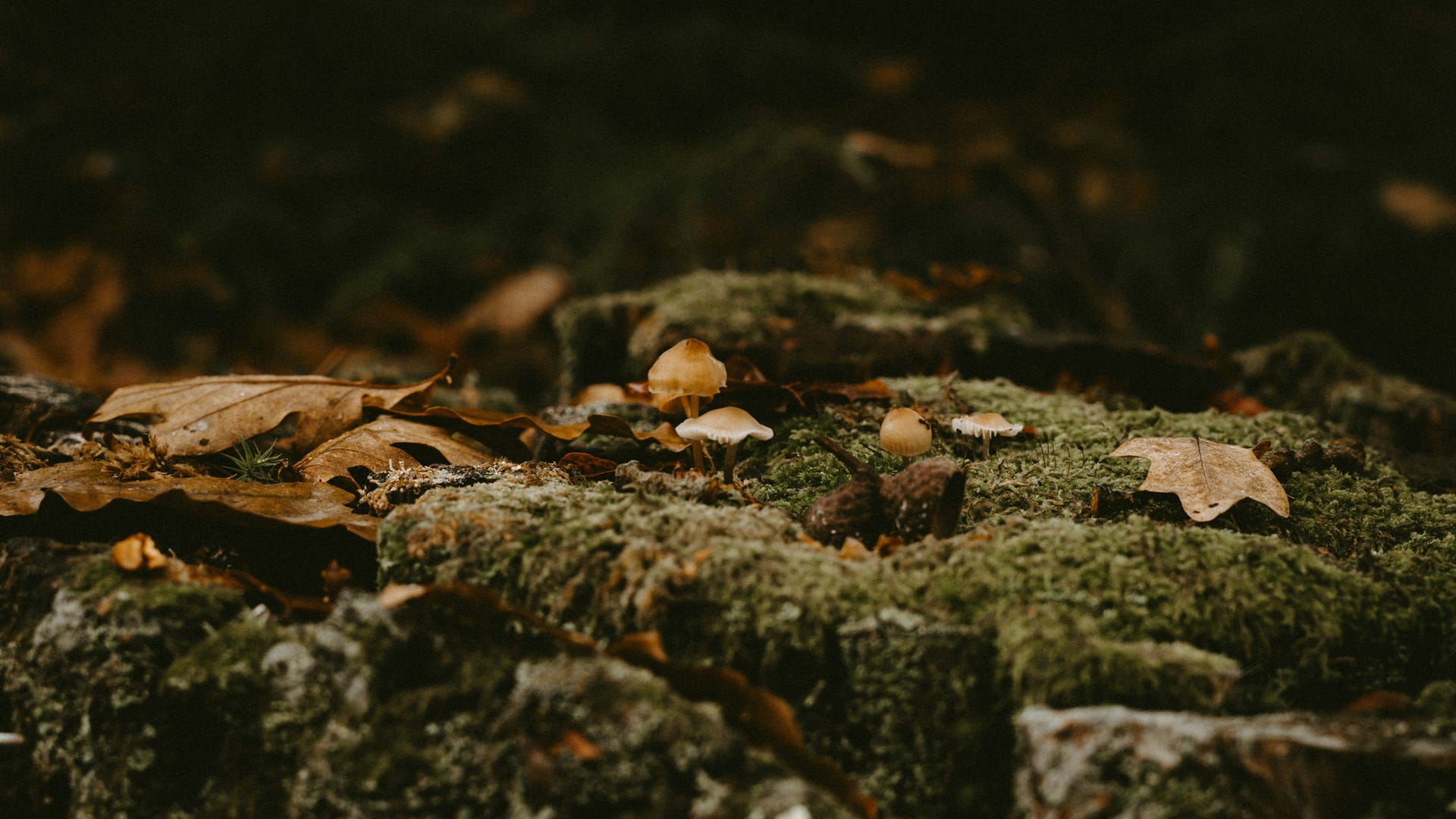
Robin Wall Kimmerer was called in as a consultant for a billionaire constructing a sprawling, lavish estate. The client wanted the grounds and stone walls to appear aged, weathered, and utterly authentic, as if they had grown naturally over decades like a moss-covered forest or an ancient ruin. To achieve this, sheets of living moss were harvested from a nearby forest and carefully transplanted onto the estate’s walls. But there was a problem: no matter what they tried, the moss kept dying.
Despite the wealth, effort, and expertise poured into the project, Kimmerer had to deliver a simple truth: the moss is dying because it cannot live where it doesn’t belong.
Ignoring context and function
We have books without readers and moss walls without ecology.
The decorative libraries by Thatcher Wine are filled with books not for readers, but to make a room appear intellectual. The books are stacked for colour, theme, or visual impact rather than for reading, and in doing so, their true purpose as vessels of knowledge is ignored.
The same thing happens with moss walls installed purely for the look of “ancient” or weathered beauty. Stripped from their ecological context, the ecosystem is effectively dead. Mosses are intimately tied to their natural environments such as specific humidity, airflow, and micro-organisms they live with. Once removed from their habitats, they cannot survive on dry stone walls, exposed to conditions unsuited to their needs.
As Kimmerer writes, “Attentiveness alone can rival the most powerful magnifying lens.” When context and function are ignored, all that remains is surface. The libraries and estate walls are nothing more than aesthetic ornaments.
Ornament is superfluous; if an object has no function, decoration is crime.
- Adolf Loos
Imitation instead of relationship
What has happened is that surface decoration has become a performance for others to view, rather than a genuine connection. In today’s world of instant gratification and online appearances, we increasingly crave the look of depth without the work of cultivating it. Instead of a genuine connection, the focus shifts to shortcuts of visual symbols of connection.
Unlike books, moss is not an object. It is a slow, ecological process, growing in harmony with its natural environment. When moss is removed from its context, it dies. Similarly, books that are never read become hollow. When we replace purpose with appearances, we create replicas of meaning, not meaning itself.
All it takes is attention and knowing how to look. I’ve found mosses to be a vehicle for intimacy with the landscape, like a secret knowledge of the forest.
- Gathering Moss, Robin Wall Kimmerer
But what if our bookshelves held books we truly loved, rather than books chosen to match a wall? What if buildings nurtured living ecosystems, instead of merely simulating them? What if beauty emerged organically, cultivated through time, care, and intention?
Using aesthetics to spark curiosity
At first, my reaction to Thatcher Wine’s libraries mirrored my response to the billionaire’s moss project. Both scenarios felt like surface aesthetics without purpose. But as I read more, a different perspective emerged.
Wine sees curation as an art form. By creating visually striking libraries, he believes it can inspire curiosity and interest in reading. Even if not every book is opened, their presence alone can spark curiosity, conversation, prompt questions, or encourage someone to pick one up. It reminded me of the times I’ve wandered through a bookstore, something many of you may be familiar with. As a designer, whenever a book had a beautifully crafted cover, it sparked my curiosity about the content, even if it wasn’t something I had planned to read.
Libraries are experiential. Some books take on a social and aesthetic function, offering an indirect purpose. Returning to the principle that form follows function, decoration can still cultivate engagement over time. What begins as purely aesthetic can gradually plant the seeds of curiosity and learning. Unlike moss, which dies when removed from its ecosystem, books can slowly gain utility and life.
Some food for thought
Which areas of your life are purely decorative? How can you create curiosity and connection?
Are there habits, projects, or even friendships where you’re chasing the look of connection instead of the real thing?
Slow down and notice one thing you usually rush through. Could you give it a bit more attention and intention today?
Practice intention.
As I try to consolidate these perspectives, it comes down to intention. When we ignore context, function, and relationships, aesthetics become hollow. Kimmerer offers a reminder worth keeping in mind:
Human-designed systems are a far cry from this ongoing creation of ecosystem health, taking without giving back.
When approached thoughtfully, beauty can invite curiosity, foster connection, and cultivate engagement over time. If we allow intention and context to guide us, even something that begins as mere decoration can spark life and interaction. Like moss, it can grow within its environment and develop a purpose of its own.
For the curious reader
Books that inspired the thoughts on this page — and are worth a look: